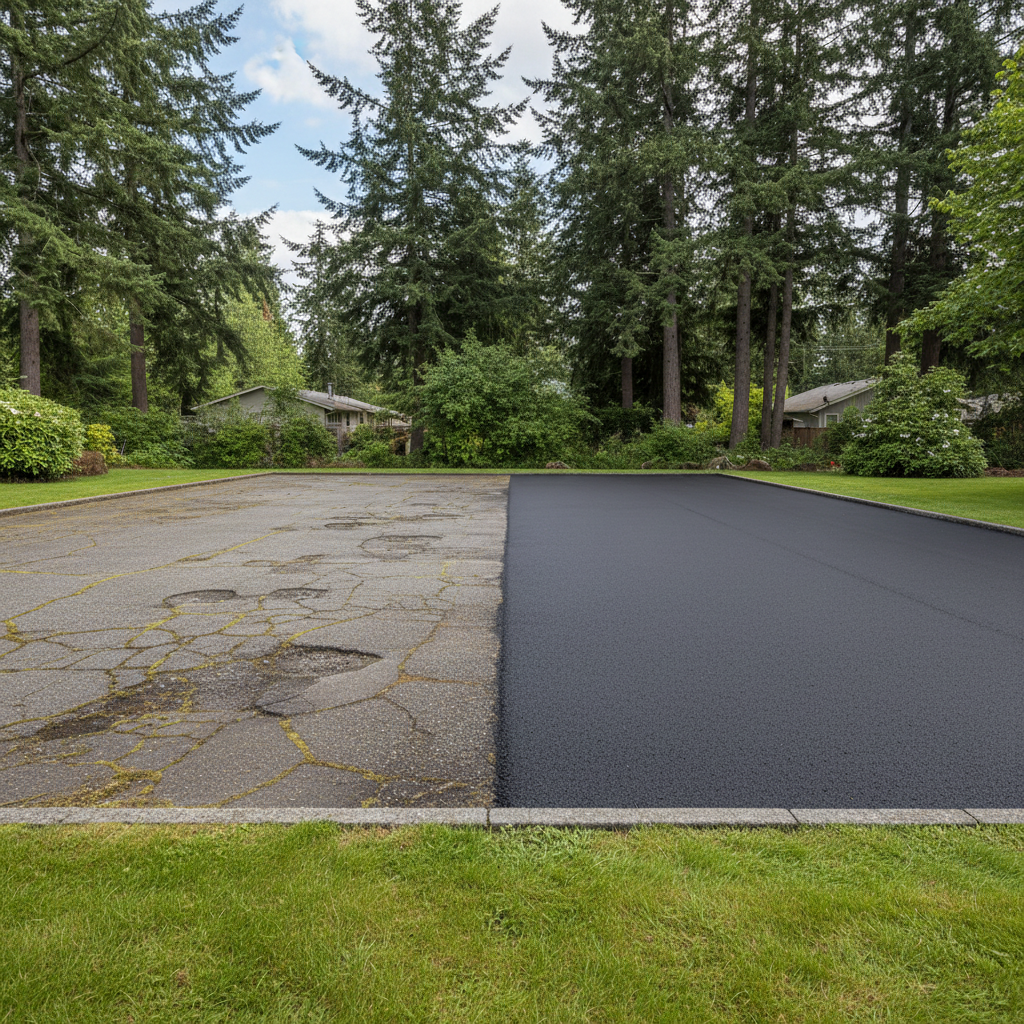
Alright, let's talk parking lots. If you own a home or manage a property here in Woodinville with a paved parking area, you've probably stared at that cracked, faded asphalt and thought, "How do I even begin to fix this?" Usually, it comes down to two main choices: an asphalt overlay or a full depth replacement. And believe me, they're not the same thing.
What's an Asphalt Overlay?
Think of an asphalt overlay like a fresh coat of paint for your parking lot. But, you know, a much thicker, more substantial one. We're talking about putting down a new layer of asphalt, usually about 1.5 to 2 inches thick, right over your existing pavement. Before we do that, though, we really have to get the surface ready. That means cleaning it well, filling any big cracks, and often milling down high spots or areas around drains so the new layer sits nice and flat. Got potholes? We'll cut those out and patch them up too. The whole idea is to create a stable, fairly smooth base for the new asphalt to stick to.
What's a Full Depth Replacement?
Now, a full depth replacement is exactly what it sounds like: we rip out everything. Every single layer of your old asphalt, and sometimes even some of the base material underneath it, gets removed. We haul it all away, then we come in and rebuild from the ground up. This usually means compacting the subgrade, laying down a fresh, strong aggregate base layer, and then paving multiple layers of new asphalt on top. It's a much bigger job, takes longer, and uses a lot more material.
Cost: The Big Question
Let's be honest; cost is usually the first thing on people's minds. An asphalt overlay is almost always going to be a lot cheaper upfront than a full depth replacement. You're using less material, less labor for digging things up, and less time on site. For a typical small to medium-sized parking lot, you could be looking at anywhere from 40% to 60% less for an overlay compared to a full replacement. That's a huge difference, which is why overlays are so popular.
Durability and Lifespan
Here's where we get down to brass tacks, literally. An overlay works great if your existing asphalt is generally solid, but just looks worn on the surface, has minor cracks, or is faded. It can add another 8-15 years to your parking lot's life, maybe even more if you keep it well-maintained. However, if the base underneath is failing — I mean, you've got widespread alligator cracking, potholes that keep popping up, or areas that are sinking — an overlay is just a temporary fix. Those problems below the surface will eventually show through the new asphalt, and you'll be dealing with issues again much sooner. What a headache.
A full depth replacement, on the other hand, is built to last. When we do it right, with a properly prepared base and good quality materials, you're looking at 20-30 years, easily. We're fixing the real reason for any past failures by rebuilding the whole structure. It's a long-term investment that really pays off with decades of paving you won't have to worry about.
Maintenance Needs
Both options benefit from good maintenance, like regular sealcoating and crack filling. With an overlay, you'll want to be extra careful about sealing any new cracks that show up, especially if they look like old cracks from the layer below. With a full replacement, your maintenance needs will be pretty minimal for the first 5-10 years. Mostly, just keeping it clean and maybe sealcoating to protect the surface from UV and water damage down the line.
Appearance
Initially, both an overlay and a full replacement will look fantastic — a smooth, dark, fresh surface. The difference shows up in how they age. An overlay will start to show signs of underlying problems sooner if the base isn't perfect. A full replacement, assuming proper drainage and construction, will keep its pristine look for much longer.
My Recommendation for Woodinville Conditions
Considering our specific conditions here in Woodinville — all that frequent rain, the freeze-thaw cycles we get some winters, and the often clay-heavy soils that don't drain as well as you'd like in spots like the Hollywood Hill neighborhood — I usually suggest a full depth replacement for parking lots that are truly falling apart. If your parking lot has widespread base failure, deep, interconnected cracks, or areas that consistently hold water, an overlay is just putting off the inevitable. You'll spend money now on an overlay, only to spend more money sooner than you'd want on a full replacement. Who needs that?
However, if your parking lot is mostly solid, with just surface wear, minor cracking, and a faded look, an overlay can be a fantastic, budget-friendly solution. It'll give you a beautiful, functional surface for many years. The trick is a thorough inspection by a pro who knows what to look for beneath the surface. That's what we do at Top Notch Asphalt. We'll give you an honest assessment of your existing pavement's condition and tell you which option truly makes the most sense for your property and your budget. Don't just guess; get the right advice for your specific situation.