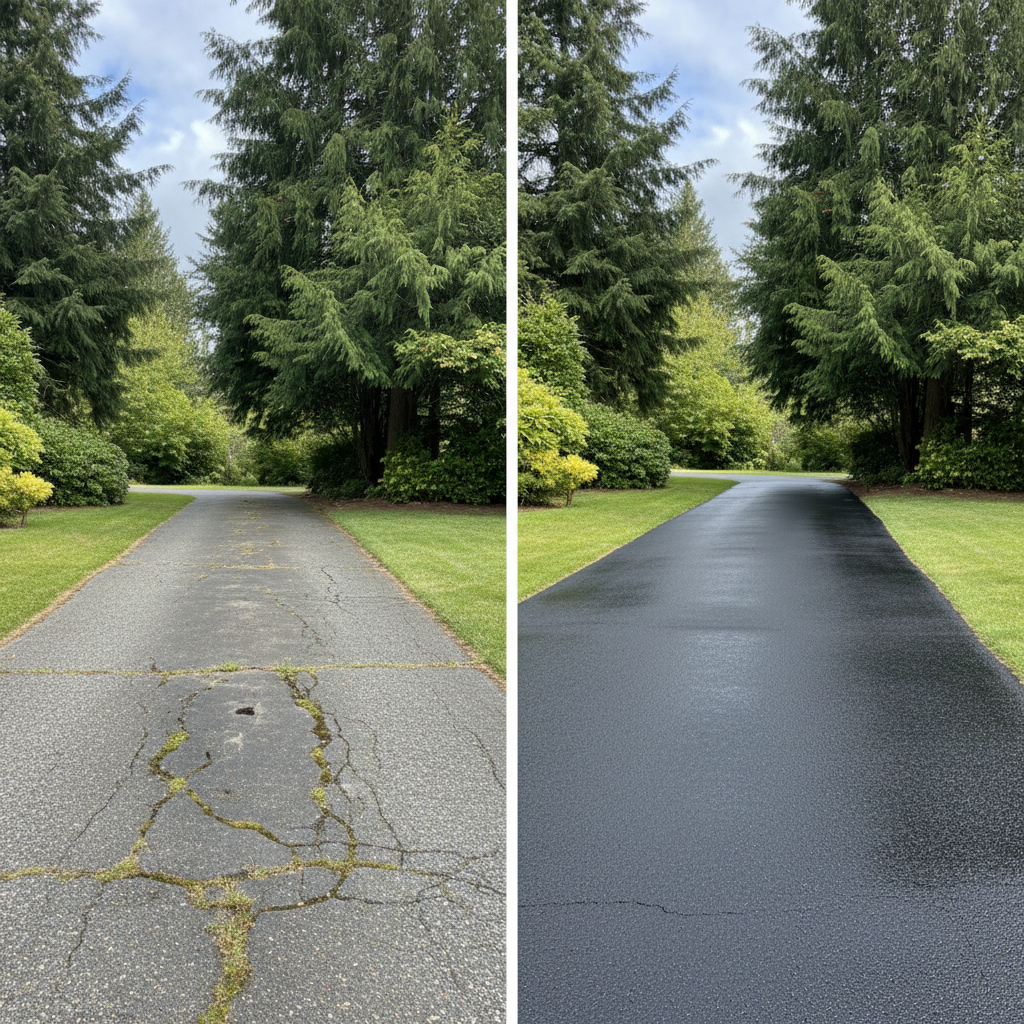
Alright, let's talk sealcoating. You've got an asphalt driveway, and you know you need to protect it from the elements, especially with our damp, moss-loving climate here in Woodinville. But then you start looking into it, and you hear about different types of sealers: oil-based (often called coal tar or refined tar) and acrylic (sometimes called asphalt emulsion). What's the deal? Which one should you actually use?
I've been laying asphalt and sealing driveways around here for years, from the sprawling properties in Hollywood Hill to the tighter suburban lots near the town center. I've seen what works and what doesn't. Let's cut through the marketing jargon and get down to brass tacks.
Oil-Based Sealers: The Traditional Choice
For a long time, oil-based sealers, specifically coal tar pitch emulsion, were the standard. They're made from a byproduct of coke production, and they've got some serious characteristics.
- Cost: Generally, these are a bit cheaper upfront. You'll often find them as the more budget-friendly option when you're getting quotes.
- Durability: They're tough. Really tough. They offer excellent resistance to gasoline, oil, and other chemicals that might drip from your car. They also stand up well to abrasion from tires and foot traffic. This chemical resistance is a big selling point.
- Appearance: When first applied, they give you that deep, rich, jet-black finish everyone loves. It looks sharp. Over time, though, it can fade a bit, and sometimes you'll see a slight graying.
- Maintenance: Not much special maintenance needed beyond regular cleaning. However, reapplication is typically recommended every 2-3 years, depending on traffic and weather exposure.
- The Catch: Here's where it gets complicated. Oil-based sealers, particularly coal tar, contain volatile organic compounds (VOCs) and polycyclic aromatic hydrocarbons (PAHs). These are not great for the environment, and there's been a lot of concern about their runoff into waterways, especially with our frequent rain. Many municipalities, though not all in Washington yet, have started restricting or even banning their use. This is a big deal, and it's something you need to be aware of.
Acrylic Sealers: The Modern Alternative
Acrylic sealers, or asphalt emulsion sealers, are made from asphalt cement mixed with water, polymers, and other additives. They're designed to be more environmentally friendly.
- Cost: You'll usually pay a bit more for acrylic sealers. The materials themselves are more expensive, and the application can sometimes be a bit more nuanced.
- Durability: They're durable, but in a different way. They're very flexible, which means they handle the freeze-thaw cycles we get here in Western Washington better than some other options. This flexibility helps prevent cracking. They don't offer the same chemical resistance as coal tar, but they're still very good at protecting against water and UV damage.
- Appearance: They also give a nice, dark black finish, perhaps not quite as 'wet-look' as fresh coal tar, but still very appealing. They tend to hold their color better over time and resist fading, which means your driveway looks newer for longer.
- Maintenance: Similar to oil-based sealers, regular cleaning is all that's usually required. Reapplication is typically recommended every 2-4 years, sometimes even longer, depending on the specific product and conditions.
- The Upside: The big advantage here is environmental impact. Acrylic sealers have significantly lower VOCs and PAHs. They're safer for your pets, your kids, and the local salmon streams that run through our area. This is a major plus for many homeowners, and frankly, for us as a local business.
My Recommendation for Woodinville Homeowners
Look, I'm not going to beat around the bush. For homeowners in Woodinville, especially with our unique environmental considerations and the typical residential traffic, I strongly recommend going with an acrylic-based asphalt emulsion sealer.
Why? First, the environmental aspect is huge. We live in a beautiful, natural area, and anything we can do to protect it, especially our local watersheds like the Sammamish River, is a win. Second, the flexibility of acrylic sealers is a real benefit for our climate. We get plenty of rain, and while we don't get extreme cold often, we do have those chilly, damp winters that can be tough on asphalt. The way acrylic sealers resist fading and maintain their color is also a big plus for curb appeal.
While the upfront cost might be a little higher, the longer lifespan and the peace of mind knowing you're using a more eco-friendly product often make it the better value in the long run. When Top Notch Asphalt seals your driveway, we're thinking about more than just today; we're thinking about how it holds up for years to come and how it impacts our community.
Ultimately, it's your driveway and your choice. But if you're asking me what's best for a Woodinville home, I'll point you toward the acrylic every time. It's a smart investment that protects your asphalt and respects our environment.